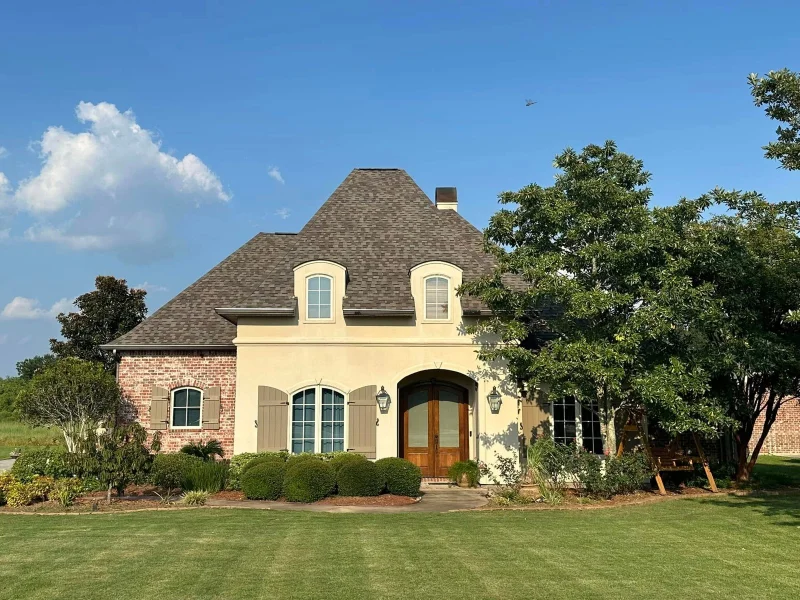

Storm & hurricane roof damage repair in Acadiana
Assessment, tarping, and repairs after wind, rain and falling limbs.
What we do.
Hurricanes can cause significant damage to homes, and one of the most vulnerable parts of any home is the roof. High winds, heavy rain, and flying debris can leave your roof in a state of disrepair, leading to leaks, structural issues, and expensive repairs if not addressed quickly.
Immediate Damage Assessment
After a storm, time is of the essence. We inspect your roof for visible and hidden damage and give you a clear assessment, so you know exactly what repairs are needed and how to move forward.
Temporary Protection
If your roof has suffered significant harm, we provide temporary solutions such as tarping and sealing to prevent leaks and water damage while we schedule permanent repairs.
Roof Repair and Replacement
Whether your roof has minor damage or requires a full replacement, we have the skills and resources to restore it to its pre-storm condition or better.
Storm-Resistant Upgrades
While fixing the immediate damage is essential, we also focus on strengthening your roof for the future with storm-resistant materials and upgrades.
Common hurricane damage includes missing or loose shingles, leaks and water intrusion, bent or torn flashing, and punctures from fallen trees and branches. We are available 7 days a week, which matters most during hurricane season.
How we do it
After a storm we start with a careful inspection on the roof and in the attic. Wind damage is not always obvious from the ground. Shingles can lift and break their seal without blowing off, and flashing can bend just enough to let water in. Inside, we look for wet decking, damp insulation and fresh stains.
We document the damage with photos and a written assessment you can give your insurer. Then we explain what needs to happen now and what can wait, and you get a detailed written estimate for the permanent work.
Tarping is temporary. It buys time to schedule permanent repairs, and the sooner those happen, the less chance water has to work its way into the decking and insulation.
- Inspection on the roof and in the attic
- Photos and a written assessment of the damage
- Tarping and sealing where water can get in
- A detailed written estimate for repairs or replacement
- Permanent repairs or a full replacement
- Thorough clean-up of roofing debris when the work is done
Signs of storm damage
Walk around the house once the weather clears and look from the ground. Do not climb onto a wet or damaged roof. These are the signs worth a call:
If a tree or large limb is resting on the roof, stay out of the rooms under it and keep clear of any downed power lines. Call the utility first if lines are involved, then call us.
- Shingles or pieces of shingle in the yard
- Missing, creased or lifted shingles, or bare patches on the roof
- Bent, torn or missing flashing around chimneys and walls
- Dents in roof vents, gutters or downspouts, which can point to hail
- Branches or limbs on the roof, even small ones
- New water stains on ceilings or walls
- Wet insulation or drips in the attic
- Piles of granules at the bottom of downspouts
Materials and storm-resistant upgrades
We install materials from GAF, CertainTeed and Owens Corning. When a storm repair turns into a replacement, it is a good moment to make the next storm less damaging.
Storm-resistant upgrades focus on the places wind attacks first: the edges, the ridges and the seams between deck boards. We explain which options make sense for your roof and your budget at the estimate.
- Impact-resistant shingles, rated to stand up better to hail
- Shingles fastened to the manufacturer's high-wind instructions
- Starter strips and drip edge that hold the roof edges down
- Sealed deck seams and upgraded underlayment as a backup layer if shingles blow off
- Secure ridge caps and vents that resist wind-driven rain
Built for Acadiana weather
The Atlantic hurricane season runs from June 1 to November 30, and the busiest stretch usually falls between August and October. Storms that come ashore anywhere along the Louisiana coast can still bring damaging wind and days of rain inland to St. Landry and Lafayette parishes.
Storm damage is not only a hurricane problem. Summer afternoon thunderstorms bring sudden gusts, heavy downpours and sometimes hail. Live oaks hold heavy limbs over many roofs, and tall pines can snap in strong wind, which is why fallen debris is one of the most common causes of roof punctures here.
Before each season, trim branches that hang over the roof, clean the gutters, and have pipe collars and flashing checked. A roof in good condition before a storm holds up far better than one that already has weak spots.


Storm & Hurricane Damage questions
What should I do right after a storm?
Can you help with my insurance claim?
How soon should storm damage be repaired?
Do I need a new roof after a hurricane?
Storm & Hurricane Damage near you
We provide storm & hurricane damage across St. Landry and Lafayette parishes. Pick your town for local roofing notes, permits and storm history.
Often done together.

Roof Repair & Leak Diagnosis
Find the leak, fix the cause, and keep water out of the house.
Learn more
Chimney, Flue Caps & Pipe Collars
The small penetrations that cause most leaks, sealed properly.
Learn moreRoof Replacement
Full tear-off and new asphalt shingle roofs, done once and done right.
Learn more